














-
|
- Environment
- Social
- Corporate Governance
- ESG Library
Carbon Neutrality Strategy
Targets and Initiatives
The TEPCO Group has set the following targets and is committed to achieving a carbon neutral society.
By 2050
Strive for net zero CO2 emissions from energy supply
FY2035
Achieve a 52% reduction in Scope 1 and Scope 2 GHG emissions* compared to FY2019
-
*
Excluding transmission and distribution losses
FY2040
Secure decarbonized power sources for more than 60% of the electricity delivered to customers
Initiatives to Achieve Carbon Neutrality
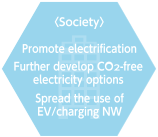
The TEPCO Group's initiatives consist of two pillars: (1) contributing to society-wide reductions in greenhouse gas (GHG) emissions through corporate growth, and (2) steadily reducing GHG emissions from our own operations.
Rapid and Proactive Power Supply
Transmission and Distribution Business
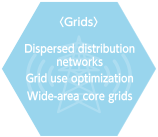
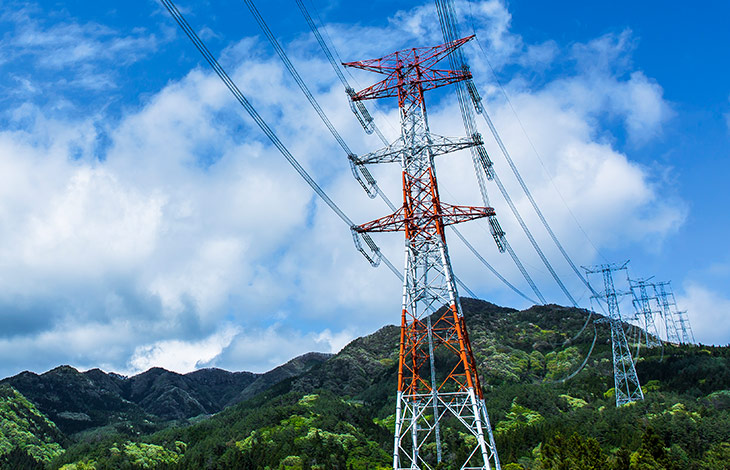
In line with progress in Green Transformation (GX) and Digital Transformation (DX), we will build a next-generation grid by leveraging distributed energy resources (DERs) and customer facilities. By securing balancing capacity and facilitating the optimal siting of renewables, we will deliver a stable and affordable power supply.
Securing Decarbonized Power Sources and Achieving Carbon Neutrality
Renewable Energy Business
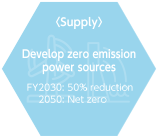
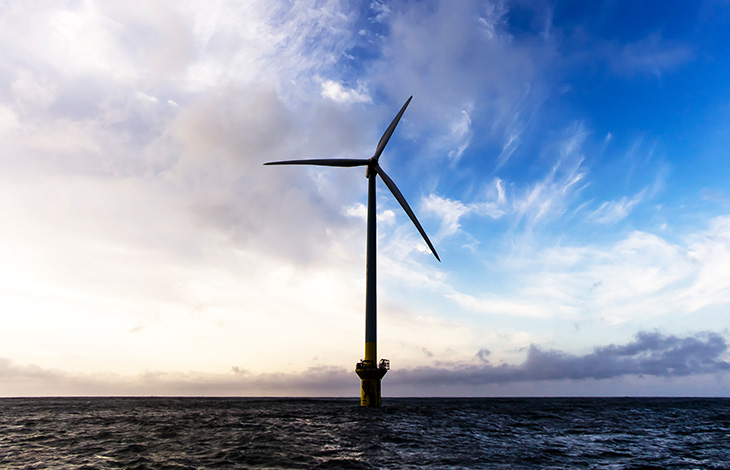
We will maintain and expand hydro power, offshore wind power, geothermal, and solar power as decarbonized power sources. Through long-term maintenance, the use of AI, technological capability building, partnerships with other companies—including those anticipating floating offshore wind power generation—and the use of government support and power purchase agreements (PPAs) to mitigate investment risks, we will decarbonize balancing capacity and enhance the competitiveness of renewable energy sources.
Grid-Scale Battery Storage Business
Through the development and operation of battery storage facilities, we will build battery storage expertise. By mitigating investment risks through partnerships and an asset-recycling investment model, we will contribute to securing balancing capacity and improving the long-term viability of renewable energy.
Hydrogen Business
With a focus on green hydrogen, we will advance demonstration projects through joint ventures. In addition to meeting hard-to-electrify heat demand, we will also utilize hydrogen for supply-demand balancing, building knowledge of the hydrogen value chain through these demonstrations.
Nuclear Power Generation Business
With safety as our foremost priority, we will advance initiatives to enhance long-term viability through such efforts as restarting the Kashiwazaki-Kariwa Nuclear Power Station, resuming construction at Higashidori, advancing the Nuclear Fuel Cycle Business, and collaborating with other companies.
Pricing and Service Options for Diverse Needs Including Rate Stabilization
Electricity Retail Business / Facility Services Business
We provide pricing plans and facility services for diverse needs, including rate stabilization and carbon neutrality.
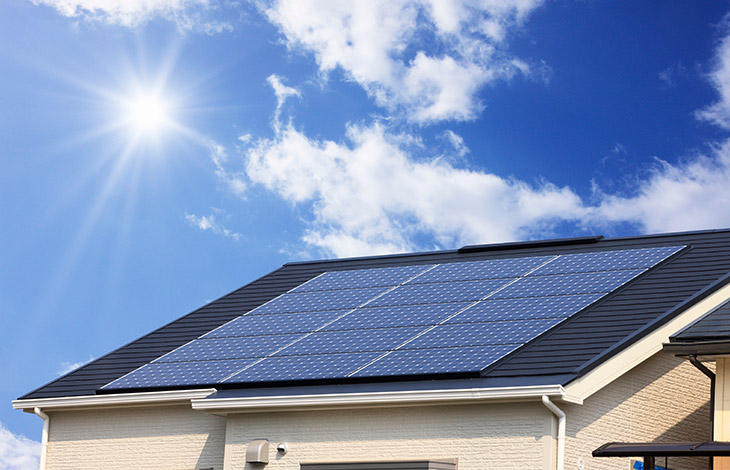
By aggregating the supply and balancing capacity generated by customer facilities such as storage batteries and utilizing them in supply-demand operations, we contribute to further stabilizing electricity rates.
GHG Emissions Reduction from Our Own Operations
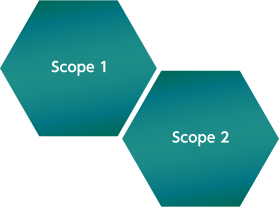
Scope 1
Reducing fuel consumption at remote island power facilities
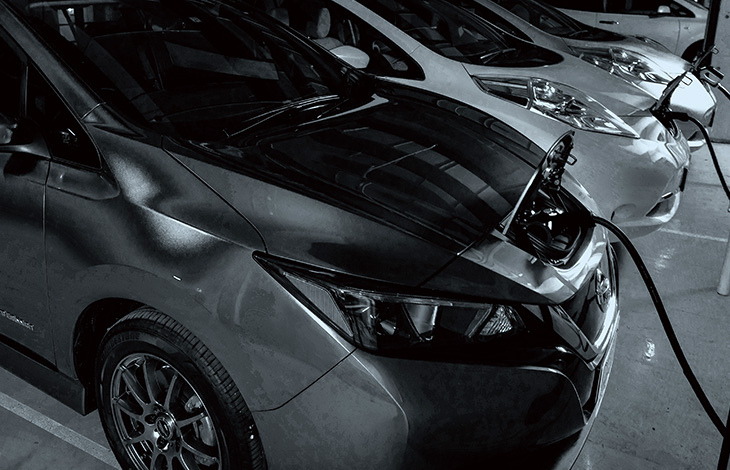
Electrifying company vehicles
Scope 2
Reducing electricity, heat, and steam consumption by converting our buildings to Net Zero Energy Buildings (ZEBs)