















-
|
- Environment
- Social
- Corporate Governance
- ESG Library
Corporate Governance
Governance Structure
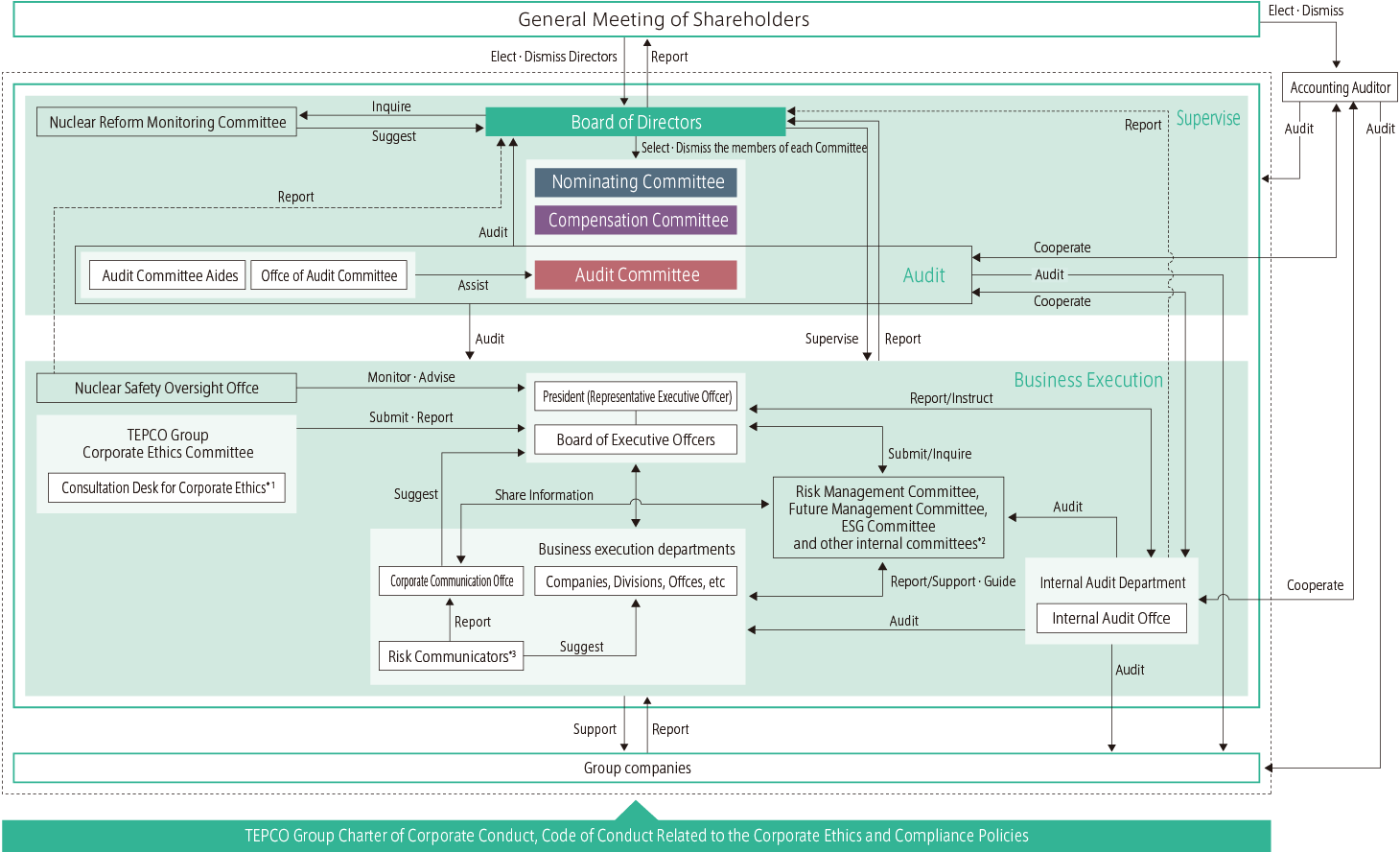
In June 2012, TEPCO Holdings transitioned to a “Company with Nominating Committee, etc.” (previously referred to as a “Company with Committees”) and has since advanced management reforms under a governance framework that clearly separates execution from oversight.
Corporate Governance Structure (as of July 2024)
-
*1
A contact point available to employees, group company employees, and external partners involved in the TEPCO Group work.
-
*2
Investment Management Committee, etc.
-
*3
Specialists responsible for risk communication
Nominating Committee
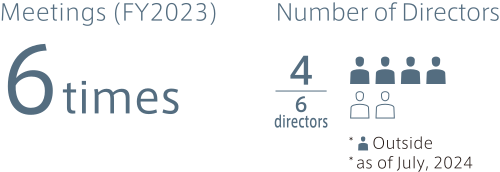
To deliver transformational management reforms, fulfill our responsibilities to Fukushima, and enhance corporate value, the Committee selects candidates with the character, insight, and capabilities required to lead business operations and corporate reforms that balance “responsibility and competition.” These individuals are appointed as candidates for Director and Executive Officer positions. In particular, the President, as head of the executive function, is expected to demonstrate decisive leadership in steering management.
Key Discussion Topics (FY2023)
- Executive appointments
Audit Committee

The Audit Committee comprises external members with expertise in accounting, legal affairs, and corporate management, together with internal members well‑versed in overall operations. In coordination with the Internal Audit Department, the Accounting Auditor, and auditors of the TEPCO Group, the Committee conducts audits in accordance with the audit plan, assessing the legality and appropriateness of the duties performed by Directors and Executive Officers.
Through the Audit Committee’s attendance at important meetings—such as the Board of Directors and the Executive Officers’ Meeting—listening to reports from Directors and Executive Officers, holding regular meetings, and examining the status of operations and assets at the head office and major sites, the Committee confirms the progress of initiatives to enhance profitability and corporate value.
Key Discussion Topics (FY2023)
- Audit plans and reports on audit results
- Meetings with Executive Officers
Compensation Committee
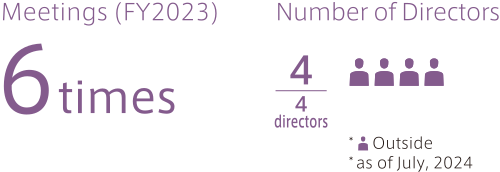
Compensation Committee consists of four independent outside directors. The basic policy for determining executive remuneration is based on three pillars: (1) securing outstanding human capital capable of leading business operations and corporate reforms that balance “responsibility and competition,” including fulfilling our responsibilities for the Fukushima Daiichi Nuclear Power Station accident, while ensuring safety and stable power supply in a competitive environment; (2) clarifying responsibilities and outcomes; and (3) enhancing incentives that drive improved business performance and sustainable growth in shareholder value. Given the differing responsibilities between directors and executive officers, separate remuneration frameworks are applied: directors receive only fixed remuneration, whereas executive officers (including those who concurrently serve as directors) receive both fixed remuneration and performance-linked compensation.
Key Discussion Topics (FY2023)
- Performance-linked remuneration amounts for each executive officer in FY2023
- Design of the executive remuneration framework for FY2024